
Rocket Mortgage / Rocket Pro / September 2026
Finding the Right Loan Product for Complex Cases
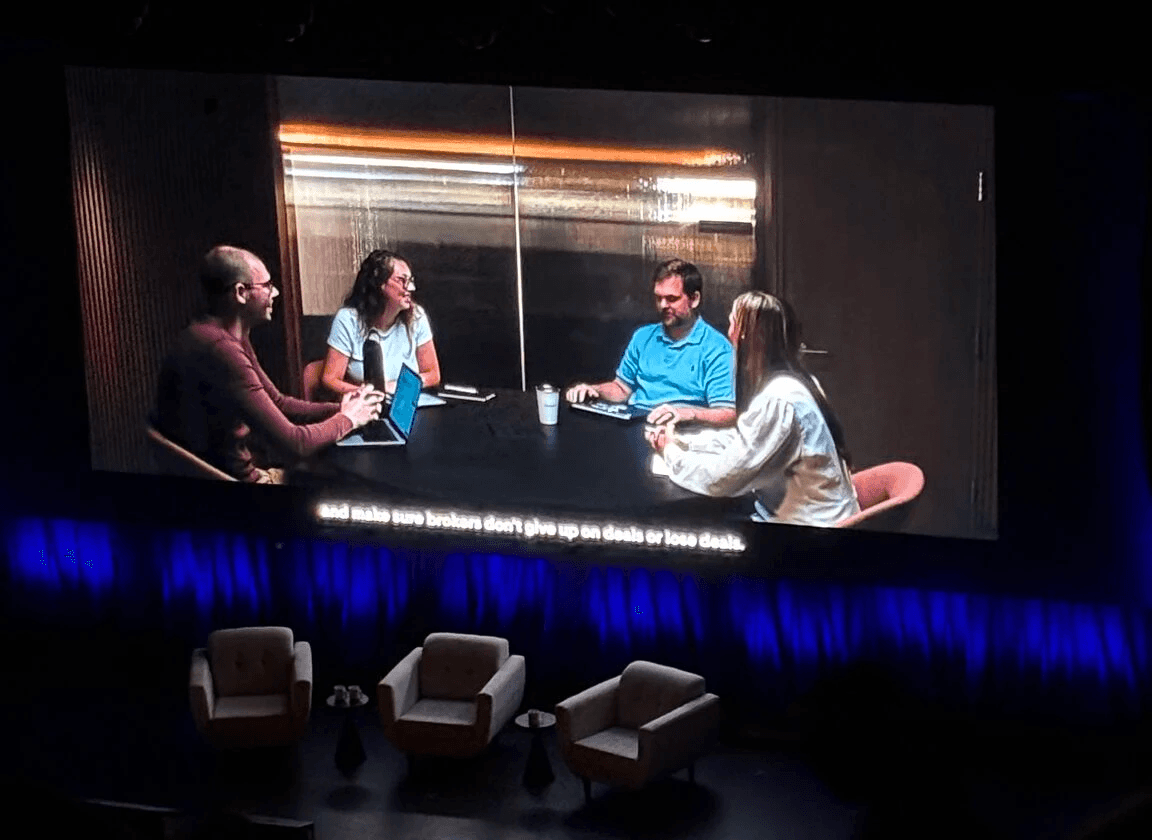
A broker partner submitted an idea through Rocket Pro's Big Pitch innovation competition: when deals get stuck, brokers have no fast way to find an alternative path. I led design from that raw problem statement to a working AI prototype in about two months, and demoed live at Rocket's flagship RPX conference.
My approach
Two early decisions shaped this design: chat-first, so brokers describe a deal naturally instead of filling out a form — and problem-first, diagnosing what's wrong before recommending a fix. I built the prototype myself using AI tooling.
Challenge
Brokers managing complex loans have no fast way to tell if a deal fits a standard product — so they research alternatives manually, losing time and momentum.
Solution
An AI chatbot that reads loan documents, cross-references with Rocket's product guidelines, flags what's stopping the deal, recommends the best-fit product, and pre-fills the application — turning hours of research into minutes.
Impact
"Instead of simply telling a broker why a loan doesn't work, Rocket Deal Rescue tells them how to make it work."
A broker can lose a deal at three different moments — we only had time to prototype one, so we needed to be deliberate about which.
Early on, we mapped three points in the loan lifecycle where this tool could live:
A pricing calculator at the very start, where a broker uploads documents and scenario details and gets a recommended path before ever submitting
A copilot during the application that helps a broker regain control when a deal starts going off track
And a post-registration check-in that keeps a loan on target through closing.
We selected the pricing calculator scenario because it was easiest to demo in a 90 second video and it was the moment brokers lost the most deals.
To ground the decision, I ran a jobs-to-be-done exercise on our shared Lucid board — mapping the broker's primary, secondary, emotional, social, and anti-jobs — and wrote a problem statement to keep the team anchored on the broker's actual experience, not just the feature.

As an independent mortgage broker, I want to quickly identify a viable path to approval when a loan scenario doesn't fit standard guidelines, so I can convert declined or stalled deals into closings without losing the borrower.
But when a loan fails, I have to manually dig through lender guidelines, overlays, and product matrices to find an alternative.
Because no single tool exists that analyzes a loan scenario holistically and automatically surfaces the right product, adjustments, or workaround — which makes me feel overwhelmed and defeated, and I often abandon deals that could have closed, costing me the commission and the client relationship.
With only two months and a broker checking in weekly, I needed to explore product directions fast — without sacrificing quality.
I started in Figma Make, spinning up explorations from a template of our existing pricing calculator — already wired into our Nova design system. I worked with Claude to shape the exploration prompts, and ran the Figma agent in parallel to surface directions I hadn't considered on my own.
Starting from a pattern brokers already trusted kept early exploration grounded, while AI-assisted variations let me test more directions in days than I could have sketched by hand in weeks.

Forcing brokers to translate a messy, complicated deal into structured form fields would have stripped out the context that actually mattered.
We pitched a few directions to Andrew, meeting weekly to stay aligned with his vision for the tool. Together we landed on a chat-first experience: brokers describe a scenario the way they'd explain it to a colleague, in their own words, instead of conforming to our process.
Keeping the broker in control of how they told the story — rather than boxing them into our fields — meant we captured the nuance that actually determines whether a deal can be saved.
This isn't just for brokers new to the business — an experienced broker hits the same wall the moment a deal falls outside Rocket's specific guidelines, or involves a product they haven't kept up with. The value holds regardless of tenure.


A chat thread alone doesn't feel like progress — a broker needed to watch the case getting stronger as they built it.
On the right, a confidence indicator climbs from Low to High as more documents and context come in, and once there's enough to work with, a product card fills in with the numbers a broker would actually send a client — monthly payment, down payment, loan amount — ready to send with one click. Callouts below it surface what's working in the broker's favor as it's discovered, like VA eligibility or a strong DTI.
A Continue to application button sits at the bottom throughout the conversation, so a broker can move to the application at any point and bring everything they've already entered with them, instead of starting over.

A generic happy-path demo wouldn't prove the concept — the prototype needed a scenario messy enough to be believable.
I brought the designs into Figma Design and worked with Claude to craft a realistic demo scenario, complete with the kind of complicated details a real broker would actually bring — not a clean, best-case example.
The scenario I built in: a self-employed borrower whose bank deposits and tax-return income didn't match, a DTI that blew past standard limits on paper, and a non-arm's-length flag buried in the file — the kind of tangle a broker would actually bring, not a textbook approval.
A design partner that only agrees with you doesn't make the work better — I wanted one that would argue with it.
I used Claude as a design partner throughout the project, not just for production work. I explicitly told it to challenge my logic and push back rather than validate whatever I proposed — to review decisions from the perspective of a principal designer, then again as a design leader, stress-testing choices before they ever reached a real review.
That wasn't abstract: partway through, it flagged a contradiction I'd been glossing over — my prototype led with product cards, but the broker partner's actual vision was problem-first, naming the issue before showing a path forward. Instead of smoothing that over, it surfaced the fork as an open decision for me and my PM, rather than just documenting what I'd already built.
That same partnership carried into the build. I used Claude Code to take the Figma screens and turn them into an actual working prototype — real chat logic, confidence scoring, and state, not just clickable frames. The tool below isn't a simulation of the experience; it's the experience, running in your browser.